

Bild
Events
Exploring recreation innovation in Edmonton, Alberta
Publishing date
On 10 September 2026, IAKS Canada welcomed recreation professionals, architects, engineers, municipal leaders, operators, suppliers, and industry partners to Edmonton for a study tour of two of Canada's most innovative recreation facilities: Borden Natural Swimming Pool and the Coronation Park Sports and Recreation Centre.
(c) Sabrina Hoeck
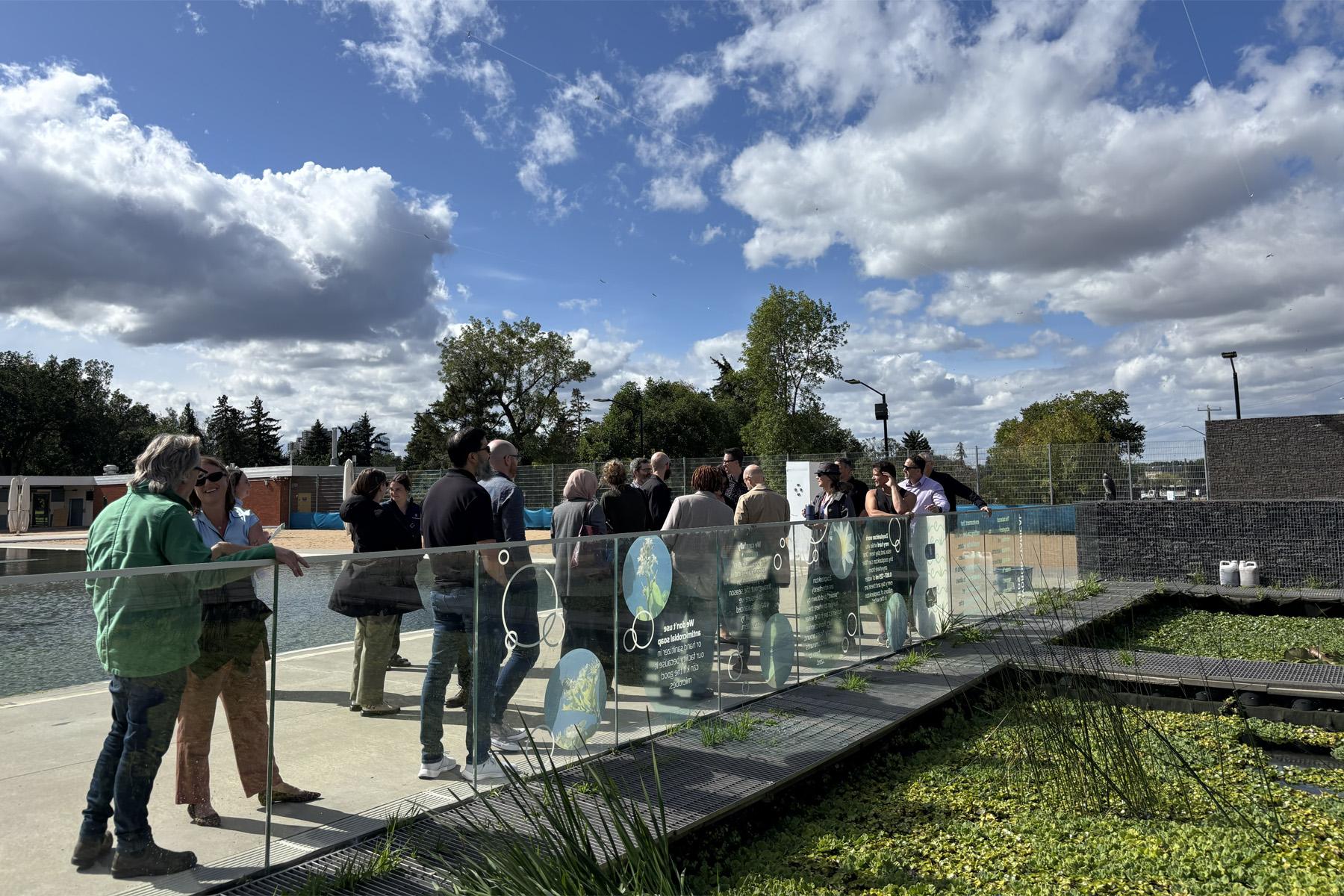
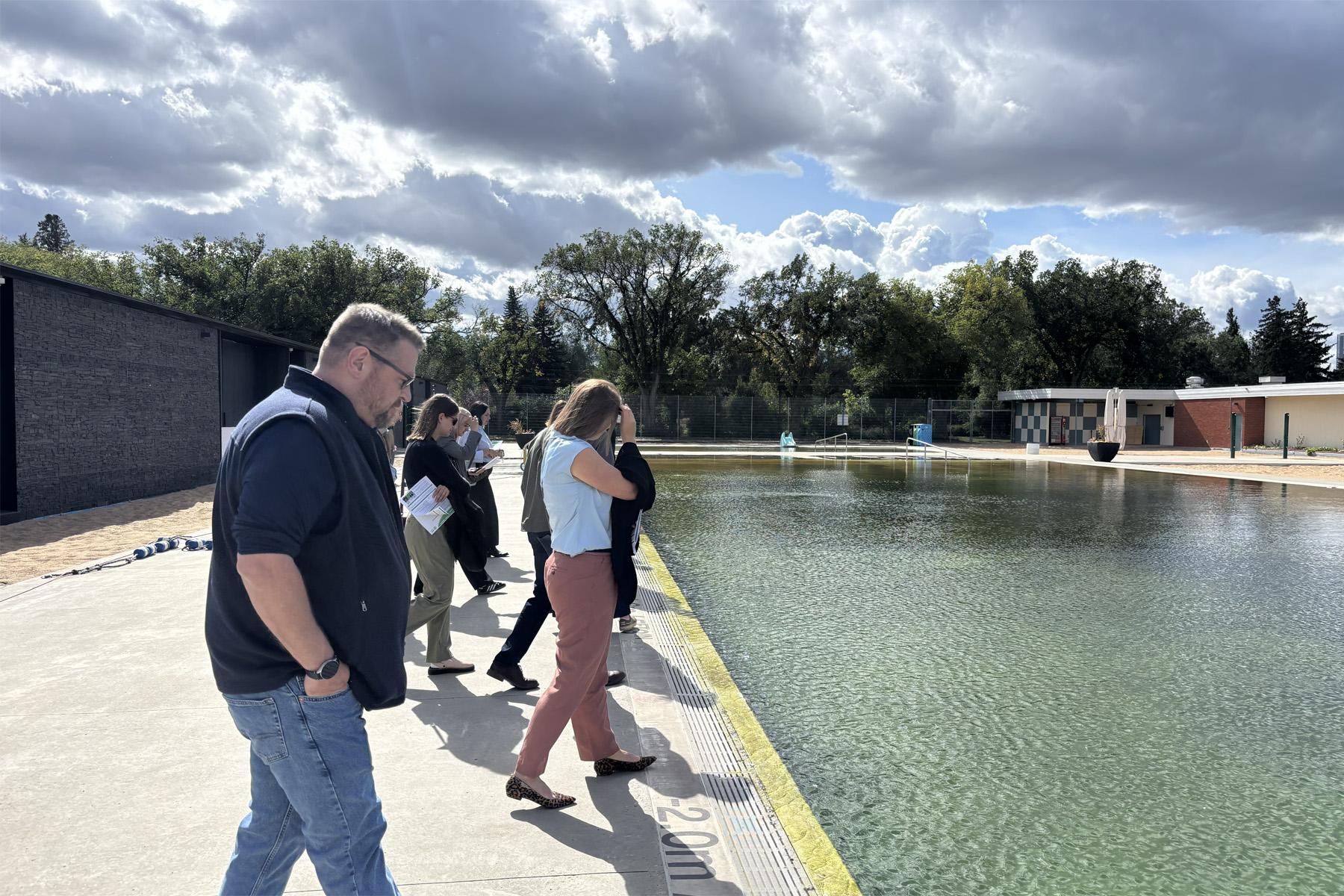
Participants had the unique opportunity to visit shortly after the swimming season had ended, while the pools remained full and operational, providing a rare chance to observe the facility before its seasonal shutdown. The tour was generously hosted by City of Edmonton staff involved both in the project's early planning and its day-to-day operation. Participants gained a deeper understanding of the natural swimming pool system, including how this proven European approach was adapted for a Canadian municipal setting. Discussions focused on biological water treatment, facility operations, maintenance requirements, and key lessons learned since opening.
Beyond the innovative water treatment system, participants gained an appreciation for the architectural excellence of the facility. The support building, housing admissions, changing rooms, washrooms, and staff spaces, is a remarkable example of how recreation infrastructure can transcend its functional requirements and become award-winning civic architecture. The building thoughtfully balances operations, user experience, and landscape integration while creating an elegant and welcoming public environment. Attendees were particularly interested in the facility's progressive approach to changing room and washroom design, which continues to serve as an important precedent for inclusive recreation facilities.
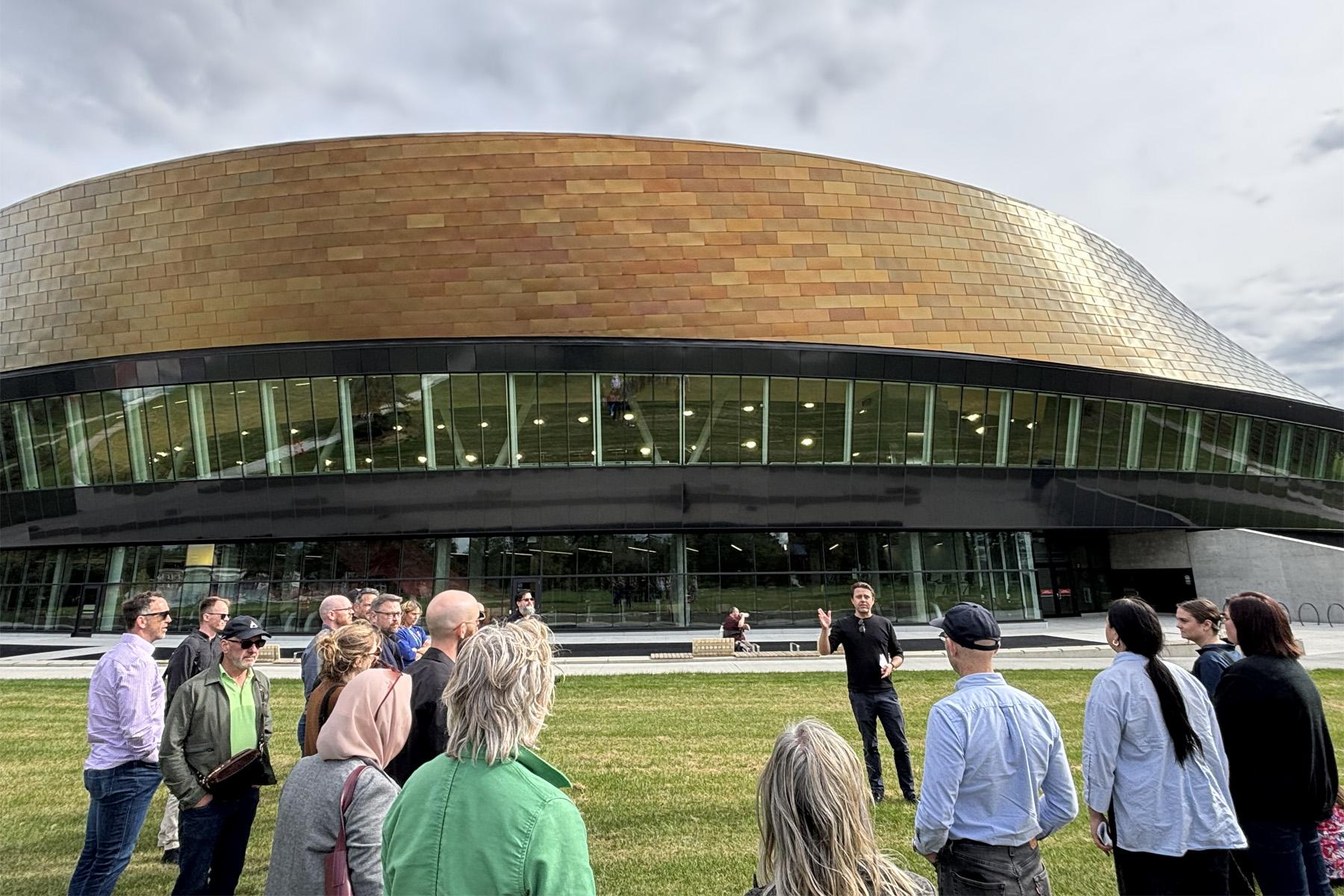
The afternoon continued at Coronation Park Sports and Recreation Centre, where representatives from the City of Edmonton and the project design team guided participants through one of Canada's most unique recreation campuses. Beginning with a walk around the exterior, the group explored how the new velodrome and community centre expansion integrate seamlessly with the existing park and aquatic facilities. Despite its considerable scale, the velodrome sits comfortably within the surrounding heritage park landscape, creating visual connections between indoor and outdoor activity.
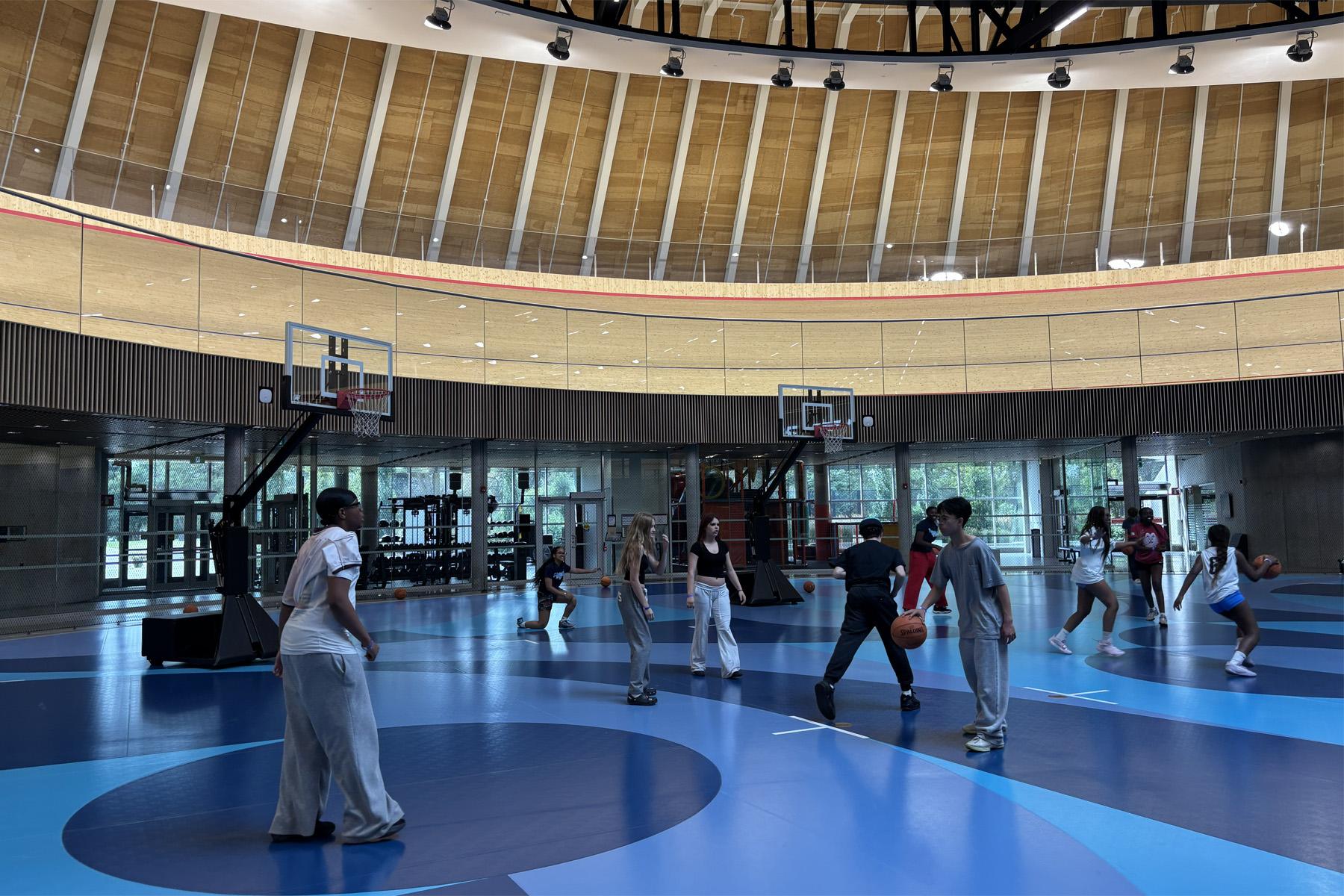
Upon entering the facility on a busy Thursday afternoon, participants experienced first-hand the centre's vibrant and inclusive atmosphere. Para-sport athletes were using the facility, teenagers gathered throughout the colourful basketball courts and informal seating areas, while groups of young dancers rehearsed routines in open community spaces.
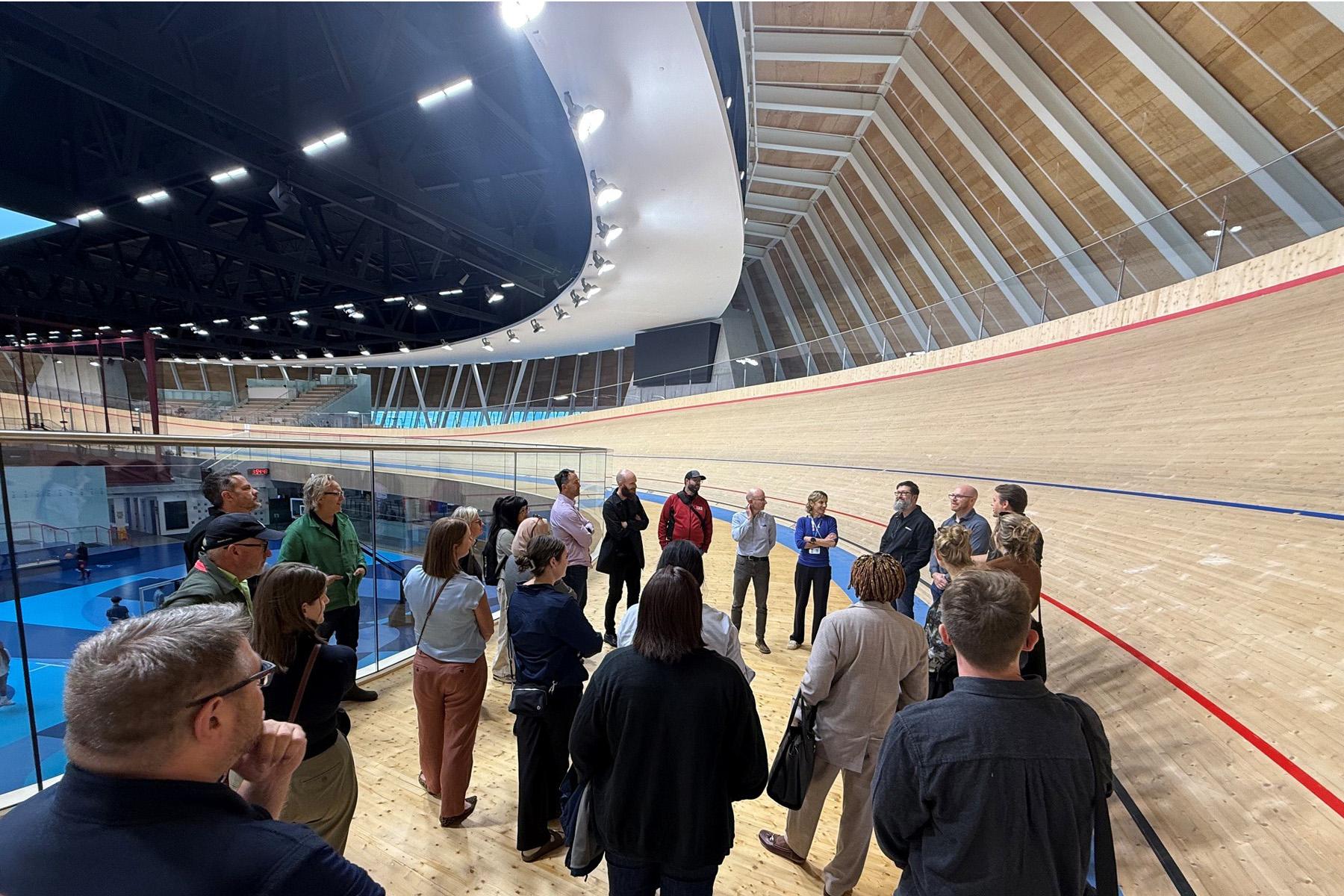
Suspended above these activities, the impressive velodrome track forms the architectural centrepiece of the building.
Participants were given the opportunity to walk alongside the track and experience its remarkable geometry up close. Standing at track level, the steep banking creates a dramatic sense of scale and speed, highlighting the skill required of high-performance cyclists. The project team also shared insights into the internationally recognized track, which achieved a higher performance classification than originally anticipated.
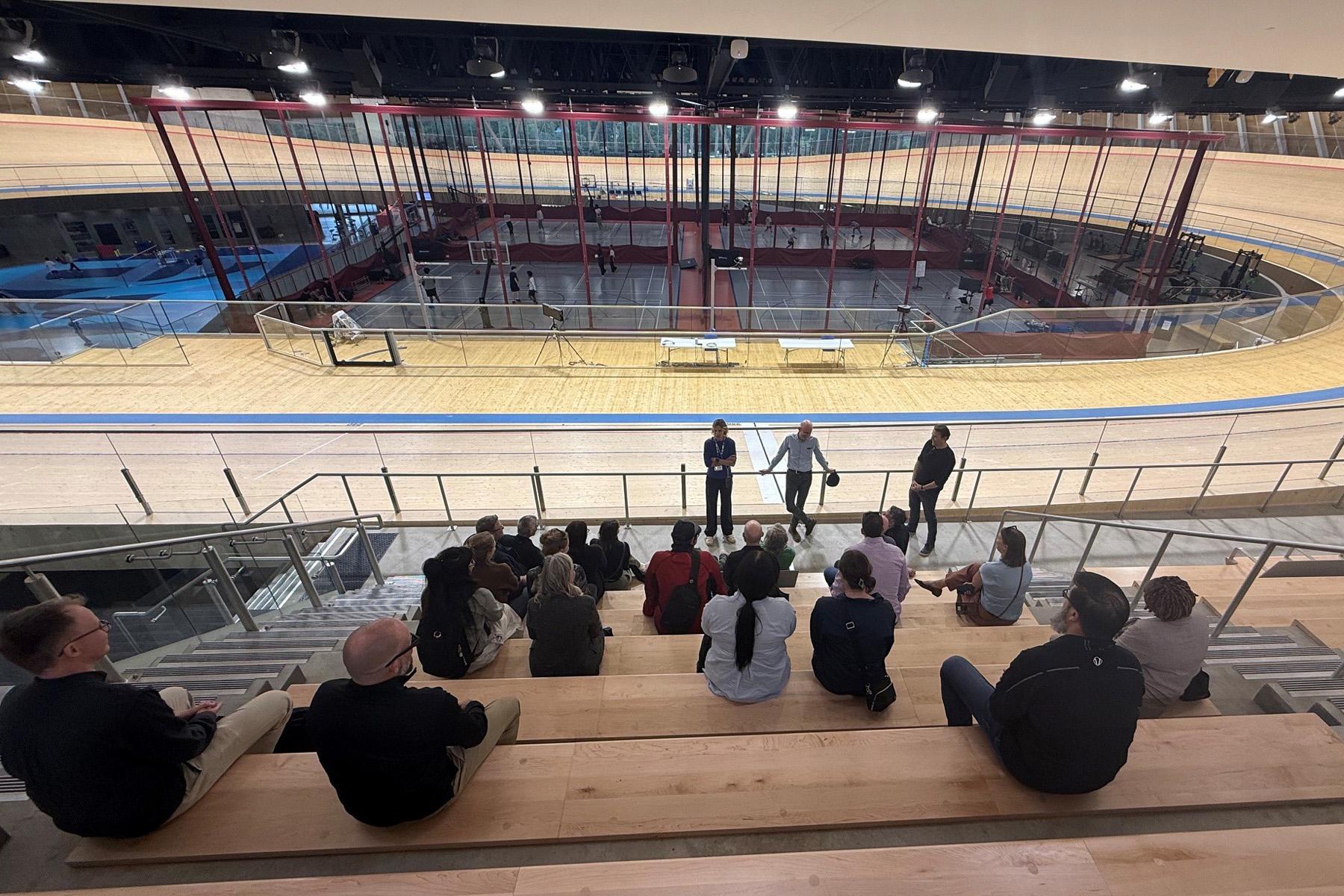
While the velodrome attracts national attention, participants learned that the facility's true success lies in its role as a community hub. The building successfully combines specialized sport infrastructure with a diverse range of recreation and community functions, creating a dynamic facility that serves users of all ages and abilities.
As one of the few facilities in Canada capable of supporting integrated triathlon training and competition activities, Coronation Park demonstrates how specialized sports infrastructure can be combined with everyday community recreation.
The tour concluded with a networking reception at Coronation Park, where attendees continued conversations and exchanged lessons learned over refreshments generously sponsored by FaulknerBrowns.